AAU Research Ethics Principles

AAU Research Ethics Principles
AAU Research Ethics Principles
The purpose of the AAU Research Ethics Committee is to ensure that research at Aalborg University is conducted in accordance with recognised international research ethics standards.
When assessing research activities, the Committee places emphasis, among other things, on the following research ethics values and principles:
AAU Research Ethics Principles


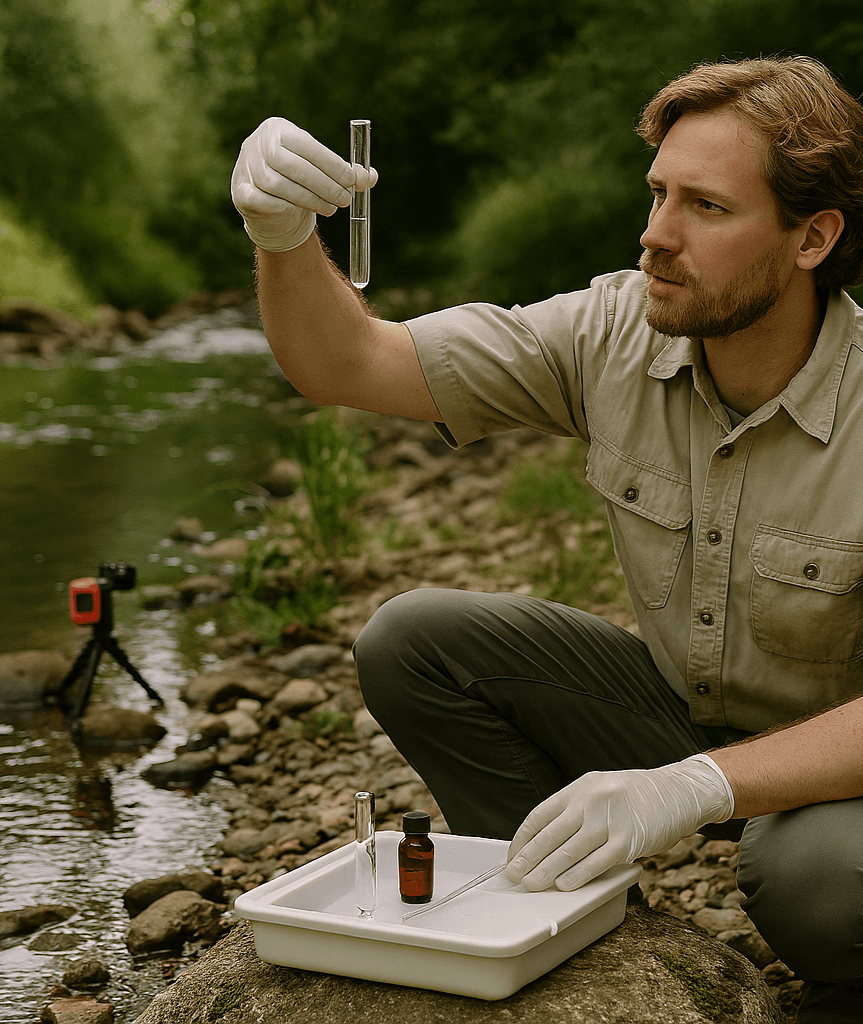



Some of the images on this page are AI-generated.
Regulations of AAU Research Ethics Committee
Ensuring that research is conducted according to high ethical standards is a globally recognised endeavour that has been institutionalised through research ethics committees. Although the institutional origins of research ethics are rooted in the field of medicine, there is now broad recognition that research ethics principles are relevant and valid across other academic disciplines, including the social sciences, the humanities, the technical sciences, and the natural sciences.
Within the research community, there is a need for institutional ethical approval of research activities. The requirement for ethical approval arises particularly in connection with researchers’ applications for research funding and the submission of publications to scientific journals.
The AAU Research Ethics Committee provides a professional, consistent, and responsible framework for the institutional review of research activities for which ethical approval is required.
The purpose of AAU Research Ethics Committee is to ensure that research conducted at Aalborg University is carried out in accordance with internationally recognised research ethics standards.
The Committee functions as a central, independent, and cross-disciplinary body covering all faculties of the University.
The Committee is named“AAU Research Ethics Committee”, but is hereinafter referred to as“the Committee.”
The purpose of the Committee is to assess whether the research activities submitted to the Committee have been designed in accordance with the applicable research ethics principles within the relevant academic discipline, as well as the relevant national, EU, and international legislation.
Research ethics principles cannot be defined unambiguously.
In this context, research ethics principles are understood as those that regulate the relationship between researchers and research participants/society. In its assessments, the Committee places emphasis, among other things, on the following research ethics values and principles:
Autonomy: Participation in research must be voluntary and free from coercion or sanctions for non-participation. Research participants must be able to withdraw at any time without providing a reason and without any consequences for services they receive.
Beneficence: The potential positive effects of the research must outweigh any possible risks to the participant, as well as risks of harmful effects on the environment, society, and culture. The research must employ methods that ensure a high level of quality.
Non-maleficence: Any potential harm to research participants or researchers must be avoided or minimised through appropriate precautions.
Justice: Research participants must be recruited fairly and must not be exploited. Researchers must not allow their investigations and conclusions to be influenced by the wishes or special interests of sponsors or commissioning parties, but must always strive for objectivity, impartiality, and independence.
Confidentiality: The research participant’s personal data must be stored securely and shared with researchers only to the extent necessary to fulfil the purpose of a research project. Research participants have the right to ensure that this is the case.
Integrity: There must be transparency in research, including transparency regarding conflicts of interest. Researchers must be open and honest about any personal, financial, institutional, or other benefit they may obtain through a research project. In cases where there may be external pressure on the research, researchers must take particular care to ensure the independent assessment of procedures, results, and conclusions through peer review or an equivalent process.
The Committee assesses the submitted research activities on the basis of these research ethics values and principles, the applicable legislation, and the other application materials submitted by the researchers.
In this context, research is understood as any activity involving the collection of data, the primary use of data, or the analysis of data (secondary use) for the purpose of increasing knowledge and understanding within a given field, confirming or disproving existing theories, developing new theories, or training students in data collection and analysis as part of their final thesis work.
The Committee assesses research activities that involve one or more research ethics aspects and where the responsible researcher is employed by, or has their primary or sole research affiliation with, Aalborg University, is enrolled as a PhD student at one of Aalborg University’s doctoral schools, or is enrolled as a student at Aalborg University.
It is not possible to provide an exhaustive list of activities that may be assessed by the Committee. It will be relevant and advisable to seek ethical approval of research activities if:
- The research may cause harm, inconvenience, or significant burden to participants, or if the research may harm the environment or society.
- The research processes confidential or sensitive information about individuals or groups.
- The researcher and the research participant are in an asymmetrical relationship of such a nature that doubts may arise regarding the voluntariness of participation in the research.
- The research is funded by companies or institutions with strong vested interests.
Examples of research requiring ethical approval can be found in Appendix A.
Certain types of research are exempt from review by the Committee.
This applies to research activities based on:
Primary data collection where all of the following requirements are met:
- Research participants are and will remain completely anonymous.
- The data are neither sensitive nor confidential.
- The research causes no harm or inconvenience and cannot result in harm to the environment or society.
- No vulnerable or particularly exposed groups are involved.
- The researchers are not subject to a financial or other significant conflict of interest.
Secondary use of data where the research is based on registry research, or where all of the following requirements are met:
- The data are fully anonymized.
- The researcher has obtained consent from the data owner.
- The researcher can demonstrate that the use of the data falls within the purpose for which the research participants originally provided consent.
- The researchers are not subject to a financial or other significant conflict of interest.
The Committee does not review research activities, or parts thereof, that are reviewed by:
- The Danish National Committee on Health Research Ethics
- The Danish Data Protection Agency
- The Danish Animal Experiments Inspectorate
- The Danish Medicines Agency
- The Danish Committee on Research Misconduct / the University's committee on research practice
Research activities, or parts thereof, that are not reviewed by any other research ethics body must therefore be reviewed by AAU Research Ethics Committee.
The Committee consists of five members.
The Deans of the Faculty of Health Sciences, the Faculty of Engineering and Science, and the Technical Faculty of IT and Design each appoint one member, while the Dean of the Faculty of Humanities and Social Sciences appoints two members representing the humanities and social sciences research fields, respectively.
The members must represent the relevant faculty’s main research area and must possess particular expertise in research ethics issues within that field.
The appointed member must have a certain level of experience as a researcher (senior researcher). The Committee members elect a Chair and a Vice-Chair from among themselves.
Members are appointed for a four-year term and may be reappointed for an additional four-year term.
In cases where the Committee requires a more thorough understanding of the scientific methods and characteristics described in relation to a research activity under review, the Committee may obtain assistance from an independent researcher with expertise in the project’s methodology or from other relevant units at Aalborg University.
The Committee Secretariat sends a response to the researcher who has applied for approval immediately after the research activity has been reviewed by the Committee.
In cases where ethical approval of a research activity has been requested, the Committee issues a statement if the research activity is assessed as being eligible for approval. If the research activity cannot be approved, the Committee issues a reasoned rejection.
The Committee may grant a conditional approval in cases where it considers that changes to the project design are required for ethical reasons, or where additional information is needed before a final approval can be granted.
If a research activity is assessed as falling outside the Committee’s area of competence, the Committee must nevertheless issue a statement if such a statement is required by an external party.
The Committee is not to be regarded as a supervisory authority and is therefore not responsible for ensuring that research activities are submitted to the Committee for review. Likewise, the Committee is not responsible for compliance with research ethics principles or relevant legislation. Responsibility for this remains with the relevant researchers and the line management.
All research activities that fall within the criteria for research ethics review must be approved by the Committee before they may commence. The Committee is required to inform the Head of Department, the Vice Dean for Research, and the Dean of any research activities that are not approved.
A researcher whose application for ethical approval has been rejected by the Committee may submit a reasoned appeal. The appeal must be submitted in writing to the Secretariat no later than 14 days after receipt of the rejection.
The Committee will then undertake a renewed review of the application.
The outcome of this review may subsequently be appealed to Aalborg University’s Strategic Council for Research and Innovation, which may appoint an ad hoc group of independent researchers with expertise in research ethics to consider the appeal.
The Committee submits an annual report on its activities to Aalborg University’s Strategic Council for Research and Innovation.
The Committee must review these regulations once a year at its final meeting before the summer recess, including an assessment of whether changes to the types of cases reviewed by the Committee or to the assessment criteria are necessary.
Examples of Research Activities Requiring Review by the Research Ethics Committee
Your research activity must be reviewed by the Research Ethics Committee if:
- The research activity involves physical research participants.
- The research activity involves the processing of information about individuals or groups of individuals that has been collected specifically for the research activity in question.
- The research activity involves the processing of information about individuals or groups of individuals that has been collected for another purpose but has been transferred to the research activity in question, unless only registry data, historical data, or data that are publicly available in the Danish National Archives are processed.
- The research activity involves countries outside the EU in ways that may entail ethical considerations requiring attention.
- The research activity includes elements that may cause harm to the environment, animals, or plants.
- The research activity involves artificial intelligence in a manner that may have negative consequences for individuals.
- The research activity is intended to develop defence or military technology.
- The research activity involves security-relevant research.
- There is a risk of a significant conflict of interest that may affect the research results and the reporting of those results.
- The research activity involves other ethical considerations.
Rules of Procedure for the AAU Research Ethics Committee
1.1 The Research Ethics Committee was established on the basis of a decision made by the Executive Management of Aalborg University at its management meeting on 18 December 2019.
1.2 The purpose of the Research Ethics Committee is described in the regulations governing the Committee. The regulations also describe the tasks that fall within the remit of the Research Ethics Committee.
2.1 The purpose of these Rules of Procedure is to establish the framework for the processing of cases by the Research Ethics Committee, including the conduct of meetings and related matters.
3.1 High-Risk Research Activities
3.1.1 Meetings
Research activities assessed as high risk are reviewed by the Research Ethics Committee at its scheduled meetings. The Committee aims to hold ten regular meetings each year. The Committee’s meeting calendar is determined once a year at the final meeting before the summer recess.
The Chair may decide to cancel a scheduled meeting if no applications have been received for consideration at that meeting.
In addition to the scheduled meetings, the Chair may decide that an application should be subject to an extraordinary expedited review where consideration of the application cannot await the next scheduled meeting.
Meetings of the Research Ethics Committee are held in closed session.
3.1.2 Meeting Notices and Chairing of Meetings
The Secretary of the Research Ethics Committee convenes the Committee’s meetings. A Committee member who is unable to attend a meeting is required to notify the Secretary of the Committee in advance.
In cases where the Committee requires a more detailed understanding of the research activities presented, the Committee may obtain assistance from one or more independent researchers with specific subject-matter expertise in the methods applied in the research activities (“ad hoc members”). The same applies where a Committee member is deemed to have a conflict of interest in relation to the consideration of an application received by the Committee.
As part of its review process, the Committee may seek assistance from AAU Innovation and Research Support, including the Contract Unit, where the Committee requires a more detailed understanding or interpretation of relevant legislation, and from Fundraising and Project Management and locally based research support staff where the Committee requires additional knowledge concerning research applications and funding bodies.
No later than ten working days before a meeting, the Secretary of the Committee distributes the agenda and the written materials and information necessary for the consideration of cases. Agenda items may be included, and ad hoc members may be invited, at the request of any Committee member or the Rector. Agenda items for ordinary meetings and the relevant supporting materials must be received by the Secretary no later than fifteen working days before the meeting. However, the Chair may waive this deadline where special circumstances so warrant.
The Chair presides over meetings of the Research Ethics Committee. In the absence of the Chair, the Vice-Chair acts in the Chair’s place.
3.1.3 Consideration of Applications at Meetings
Members of the Research Ethics Committee are required to attend the Committee’s meetings. Ad hoc members participate in the consideration of cases on an equal basis with the Committee’s permanent members and are required to familiarise themselves with the written materials and information distributed before the meeting, cf. Section 4.4.
If a member of the Research Ethics Committee is deemed to have a conflict of interest in relation to an application for ethical approval or a statement, that member is excluded from participating in the consideration of that application. The conflicted member must leave the meeting room while the application is being considered.
The Research Ethics Committee may only consider applications if at least three members, including the Chair or the Vice-Chair, are present. In addition, with respect to a specific application, either the member representing the faculty to which the application belongs must participate in the review, or an ad hoc member possessing the necessary and specific knowledge of the relevant field of research and methods must participate in the consideration of the application.
Cases may not be considered in writing. However, where the Chair has decided that an application should be subject to expedited review, cf. above, the Chair may dispense with this requirement. The review of an application is conducted by giving all members an opportunity to express their views on the research activity and methods described in the application. In their review of cases, Committee members represent the University as a whole and not merely their own academic field. Once all members have expressed their views, the Chair formulates the Committee’s conclusion for the purpose of the Committee’s statement.
3.1.4 Minutes
The Secretary of the Research Ethics Committee prepares minutes of the Committee’s meetings.
No later than five working days after the meeting, the Secretary circulates the minutes for approval to the Committee members and to any ad hoc members who participated in the meeting.
Members have a maximum of five working days after receipt of the minutes to submit comments. Thereafter, the minutes are deemed approved.
The minutes must also record which members were present at the beginning of the meeting.
3.2 Low-Risk Research Activities
Research activities assessed as low risk are reviewed by the Chair of the Research Ethics Committee together with the Committee member representing the relevant faculty. Applications concerning low-risk research activities are processed on an ongoing basis.
Cases are considered in writing. The review of an application is conducted by the Chair of the Research Ethics Committee and the Committee member representing the relevant faculty, each expressing their views on the research activity and methods described in the application. Once both have expressed their views, the Chair formulates the Committee’s conclusion for the purpose of the Committee’s statement.
Applications are expected to be processed within a maximum of ten working days.
The Research Ethics Committee concludes the processing of an application for ethical approval by issuing an opinion. The opinion must include a reasoned assessment of whether ethical approval can be granted or not.
The decisions of the Research Ethics Committee are made by a simple majority vote. In the event of a tied vote, the Chair's vote is decisive. Ad hoc members do not have voting rights.
The opinion is signed by the Chair of the Committee and sent by the Secretary to the applicant.
The Research Ethics Committee reports annually to the Strategic Council for Research and Innovation on its activities.
The members of the Research Ethics Committee are subject to a duty of confidentiality with regard to information covered by the provisions on confidentiality in applicable legislation, including section 27 of the Danish Public Administration Act.
Changes to these Rules of Procedure may be made by the Committee by a simple majority vote.
Need Help?
You are always welcome to reach out to us for assistance.
Contact the Research Ethics Committee Secretariat
If you experience technical issues, please contact IT Support
Privacy policy
Read more about our Privacy Policy.